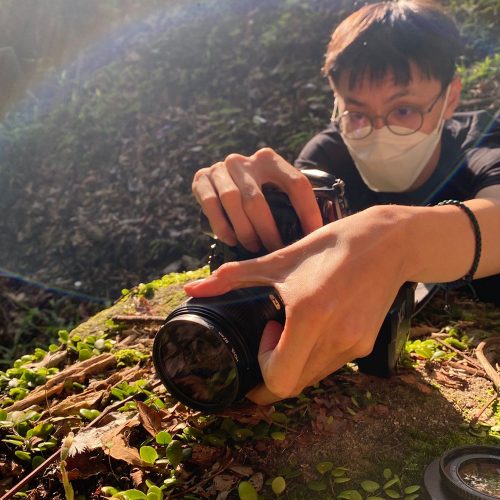
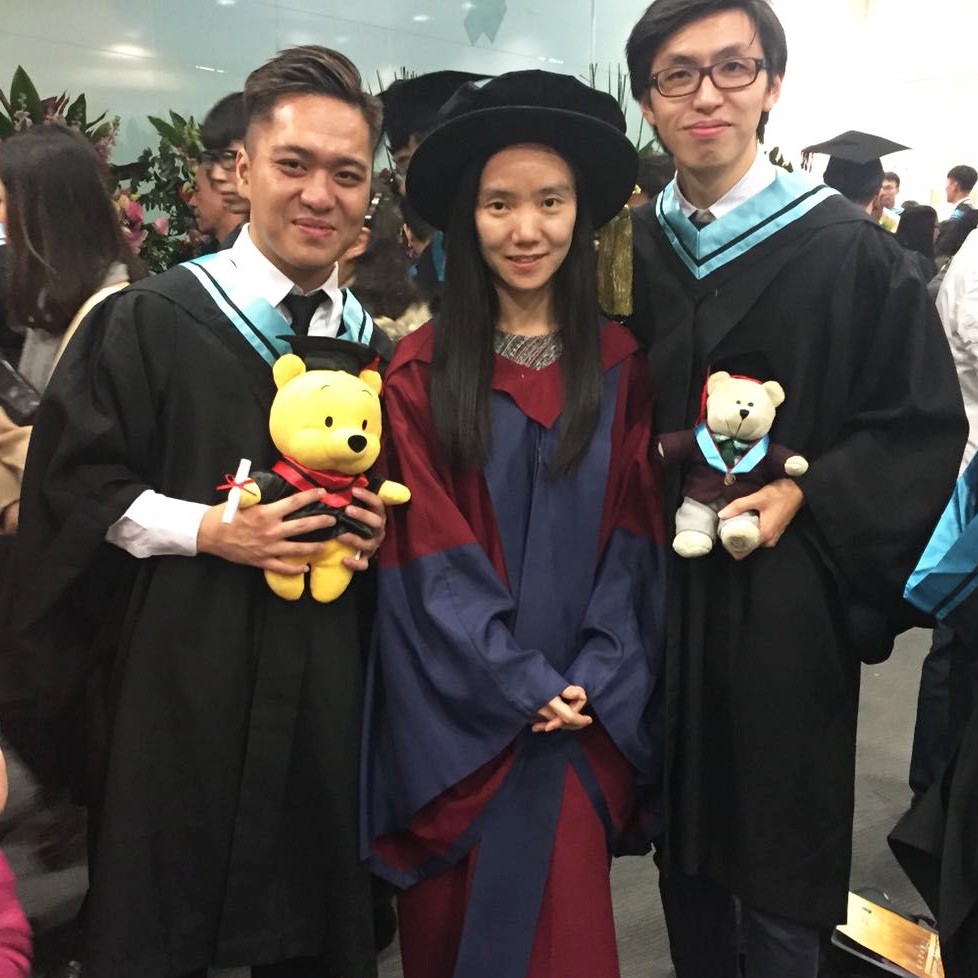
When Arthur Yu was a secondary school student, he often held his aunt’s camera to hunt for good pictures. He took photos of different creatures including flowers, birds, insects and fish, fascinated by all of them. This inner indescribable feeling gradually led him to get close to nature. During Arthur's associate degree studies, he visited Sabah in Malaysia. 'It was my first study tour and I came across various wild animals and plants. That experience had a great impact on me and I felt that I must do something for nature!' he recalled. Arthur later became an undergraduate student at HKMU and had an opportunity to join the University Student Sponsorship Programme of the Ocean Park Conservation Foundation Hong Kong. He went to Bali in Indonesia to participate in the research of Banggai cardinalfish (Pterapogon kauderni) and learnt a lot from it. After graduation, Arthur embarked on the field of ecology, promoting the importance of conservation through public education. He also launched community-based educational programmes on the protection of local wild orchids.
Deeply intrigued by local wild orchids
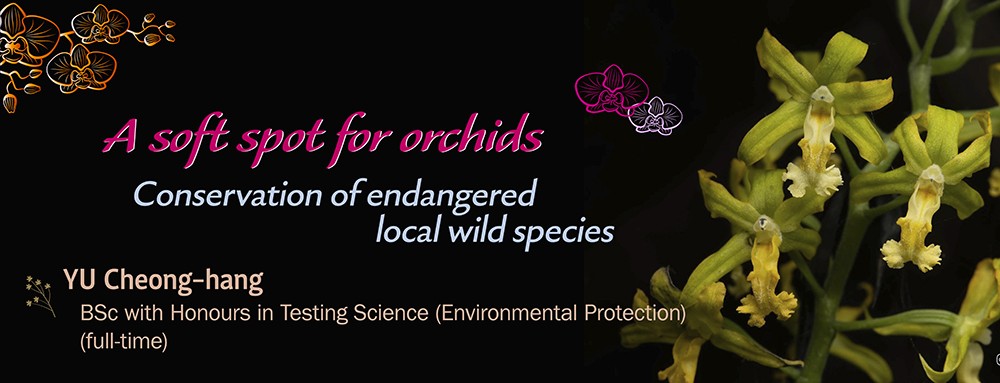
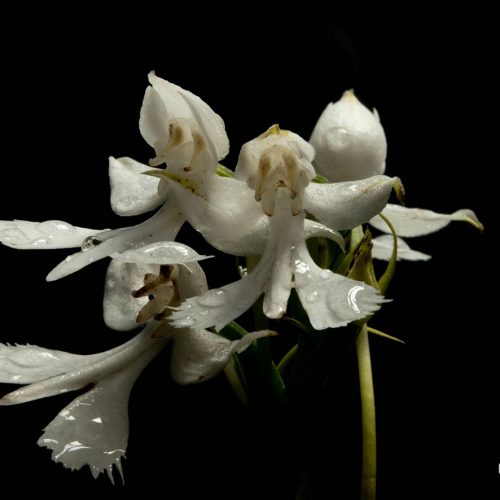
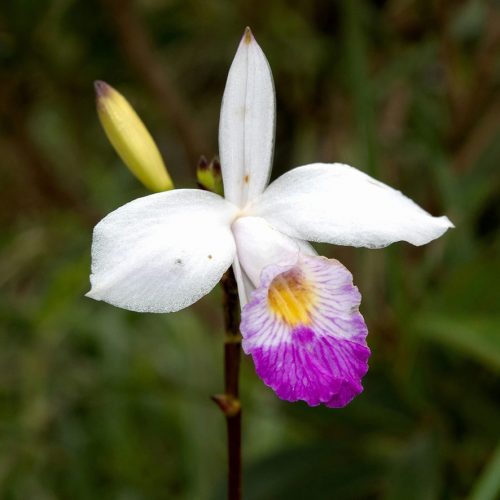
Among the hundreds of thousands of flowers, Arthur is attracted by the relatively uncommon wild orchid, not only because of 'her' beauty, but also conservation value. Led by an orchid aficionado friend in the beginning, he later brushed up his knowledge by reading illustrated handbooks and foreign literature. 'Available information is scarce. I learnt much more from seeing the orchids in the wild with my friends.' When Arthur was studying for a master’s degree, he chose orchids as the topic of his research project and made monthly trips with teammates to look for and take photos of them for record. Wild orchids grow in a variety of environments – mountains, grassy places or even rock crevices – and they had to travel long distances to go deep into the hills, often racing against time. He pointed out, 'Different species of orchids have different flowering periods. They only bloom once a year, so we must go to see them as soon as possible. Once they have withered, we shall have to wait for another year.'
As his love for orchids deepened, Arthur began to cherish them more and saw the importance of conserving them. 'Wild orchids are endangered species. They are rare and must be protected.' When he was conducting his research project, he created the 'Hong Kong Wild Orchids' website with like-minded friends to present photos and information about orchid species collected assiduously over a long period of time. A Facebook page was also set up to drive discussion. 'Forty-two species of local wild orchids have been recorded, and the Facebook group has more than 500 members, including scholars who specialise in orchid research.'
Admire from a distance
However, they are determined to keep the whereabouts of orchids a secret. 'The information provided on the website is succinct and easy-to-comprehend. While we hope the public can learn more about local wild orchids, we don't want to see more illegal collection. Group members must also abide by the rules, including not disclosing the locations of wild orchids and picking them. Just look at them naturally and enjoy.' During his orchid excursions, he noticed many behaviours that would put wild orchids at risk, such as illegal picking. Some people even made the countryside their private garden, planting cultivated orchids alongside wild species and endangering their natural habitats.
Arthur said he only played a modest role from behind in promoting the understanding and protection of local wild orchids, using subtle approaches to educate the public gradually and encouraging everyone to take action to protect nature. 'While experts at Kadoorie Farm focus on frontline scientific research, we, as community-based conservationists, stand behind them to do education work. We hope to change the mentality of the public, encourage ''quiet observation'' and appreciation of various orchid species and promote the love and protection of nature.' Arthur agrees that environmental awareness of the general public has gradually increased in recent years, but he also laments the difficulties of engaging in conservation work in Hong Kong. 'The crux of the matter is whether people will put words into action and change their habits.' Fortunately, his discussion platform and website have attracted media attention, and he has also been invited to talk about orchids on TV. Such efforts would hopefully pay off.
Engaging in environmental conservation
Arthur recalled that when he participated in the Banggai cardinalfish research in Bali, he visited a conservation centre on the island and learnt about another project, which used sustainable ways to help fishermen maintain their catches. The visit made him understand that conservation work could go beyond endangered species. When he interacted with residents there, he was flabbergasted to find that they also knew about Hong Kong people’s penchant for coral fish eating. 'The consumption habits of Hong Kong people have already been threatening ecological environments far away.'
Arthur benefited a lot from the trip. After graduation, he devoted himself to work related to environmental education. Apart from flowers, Arthur also loves birds. With years of bird watching experience, he became a staff member of the Hong Kong Bird Watching Society in the middle of last year. Arthur gave school and public lectures, organised educational activities and did other work on behalf of the Society, continuing his mission of promoting the love of nature to the public. 'Environmental education is still considered unimportant work in Hong Kong, and most people only regard it as a subject for interest classes and extracurricular activities. I hope to bring it into mainstream education and awaken the public to change their attitudes.' Projects such as training young people to become nature guides are already in his mind. 'It’s like planting a seed, hoping that they will continue to deepen their respect for nature and go on to inspire others.' For fellow students who intend to make a career in environmental education, Arthur gave this advice from his heart: 'The returns for this career field are not high. You have to love the natural environment and education work very much before you can spend years in it.'