This seminar will focus on some of the areas that will help you get your research published in high quality journals. The speaker will share his experience from the perspective of an academic who has published widely and served as an Associate Editor and Editor-in-Chief, enabling the process to be seen through the lens of both an author and an editor.
It will cover areas such as “What is a high-quality journal?”, “What do editors look for when you submit a paper?” and “How you should respond to reviewer’s comments?”, but it will touch on other topics, guided by questions posed by the audience.

Sustainable food choices have been a popular research topic in the last two decades. It is believed that consumers' deliberate choices of sustainable food would drive the business to innovate more quickly the way they manufacture to minimise carbon footprints and even practise circular economy with minimum environmental costs. In this study we provide an integrative and analytical review of factors determining sustainable seafood choice of consumers. Relevant empirical research is integrated into the review. We synthesize the developing knowledge about the determining factors influencing the consumers' choice. With the use of Poeszi's Triad Model, which comprises 'motivation', 'capacity' and 'opportunity', this study develops a guide for the practitioners in the sustainable seafood industry, based on the major determinants that have been defragmented and integrated from hundreds of relevant academic studies. It provides the corresponding suggestions for the practitioners who would like to more effectively promote sustainable seafood consumption.
This presentation examines the response of Multinational Enterprises (MNEs) to anti-globalization trends including the fracture in the world economic system, reactions to the negative consequences of globalization and protectionist policies and rhetoric.
The fracture of the world economy between “China” and “the West” as a result of “systemic competition”, the splinternet and the designation of increasing swathes of the economy as “strategic assets” has resulted in an integrated environment for business becoming more contested and difficulties in the smooth ordering of global value chains.
The rise of nationalistic policies and regional blocs together with the phenomenon of the “left-behind“ (the section of society disadvantaged by globalization) and other externalities leave MNEs exposed to a higher degree of regulation and increased opposition from (sections of) civil society. This is exacerbated by the COVID-19 pandemic and the rise of the “Biosecurity State”. Global governance of value chains is thus changing and the presentation speculates on the form that this is likely to take.
Consequently, the strategies of MNEs must respond to the new circumstances, globally, regionally and nationally. The presentation examines the immediate responses of MNEs, their short run and long run strategies and speculates on the strategies that they are likely to implement in the long long run.
Immediate strategic change is that necessary to secure the survival of the MNE. Short-term strategies are information based concerning planning and foresight. Long-term strategies include reorganization, regionalization, aggregation and relocation strategies. Long long-term strategies are much more fluid and include cartelization.
Overall, this suggests profound changes in the governance of global value chains under the orchestration of focal MNEs.
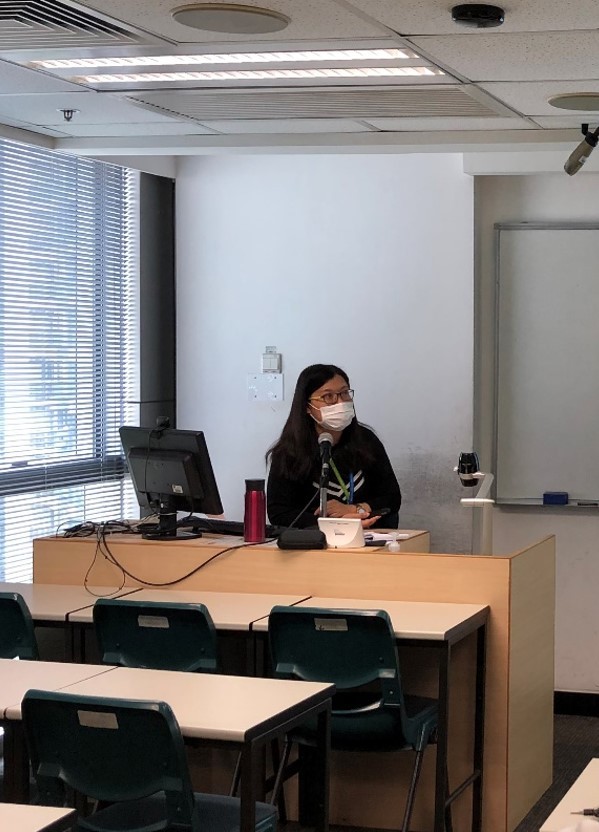
Well-being has been popularized as a global concept, because it is regarded as universally significant to everyone. This study offers an alternative view on well-being and assesses its discursive capacity. An archaeological examination on well-being is presented. By tracing the (trans) formation of the concept, additional ontological possibilities of well-being are revealed – Well-being is dynamic, but culturally-bounded. The examination also dissects the problem of essentialism in the discourse. This is illustrated along its transformation, where well-being is being appropriated to the Chinese (the other's) context. Thus, revealing an insidious form of colonization through the globalization of a concept. At last, the study offers 'a' plausible way of decolonization by opening up 'an' interstitial space – the discourse of good life, where the others are able to share the same discursive space with the West for dialogues.
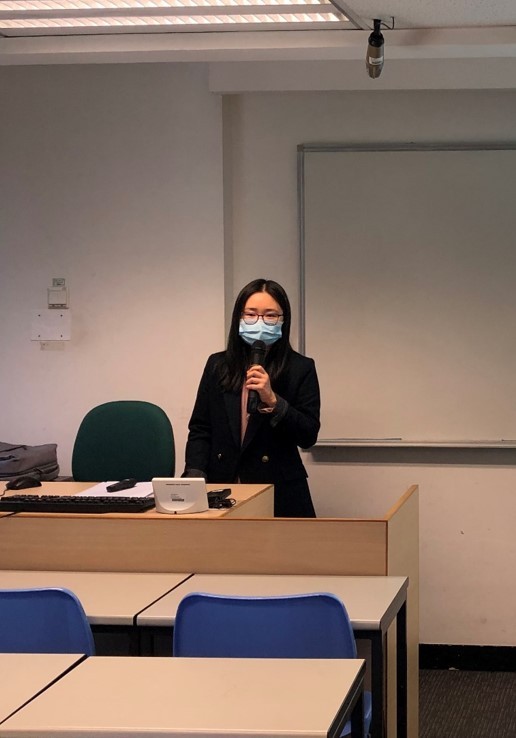
We examine how public negative labeling affects team performance. Across four studies, we test and find support for our model; that public negative labeling undermines team performance via reduced perceptions of team interaction quality. Our study contributes to the expansive conversation on team effectiveness which highlights that “fighting fire with fire” in terms of public negative labeling is ineffective for dealing with uncivil workplace behavior.
Many previous studies argue that the presence of independent non-executive directors (INEDs) can improve the quality of corporate governance and firm performance. However, research studies in this area is across different countries and stock exchanges have produced inconsistent conclusions. This study examines the relationship between INEDs and the performance of firms listed on the Hong Kong Stock Exchange (SEHK). Given the stringent INED requirements applied to SEHK-listed companies over the last 20 years, whether increased INED presence is beneficial was investigated for the listed companies in Hong Kong by using a panel regression model.
The results of this study should help in reviewing the suitability of the current INED standards and whether they can be applied to different firm segments in Hong Kong. The policymakers/regulators could determine whether further revision of the current INED policy is necessary.
The results can be further investigated and applied to other emerging markets/regions worldwide and may be particularly suitable for regions with many family-controlled and state-owned enterprises.
This seminar discusses three research projects dealing with the fascinating history of financial thought. First, is the story of the seminal real option transaction by Thales the Milesian, as recorded in Aristotle's Politics. We discuss unknown details of this account and provide empirical estimates based on plausible parameters. Second, we look into the history of finance via iconographical and sociological analysis of relevant images by prominent artists such as Jan Brueghel the Younger, William Hogarth and Edgar Degas. Visual representations and reflections of social, professional and everyday activities have been common since antiquity and works of art provide important historical narratives. Finally, we outline some key ideas of the so-called Dow theorists and discuss how these are related to later developments in the academic literature. Although Dow theory has been very popular and influential amongst practitioners for over a century, its innovativeness and importance in the development of modern finance have not yet been fully understood.

Although people persistently prefer customer services provided by humans over artificial intelligence (AI), little research has examined an affective cure for such non-humanity aversion. Since awe-inducing natural scenes make people believe that humans are insignificant and subordinate to nature, we argue that awe for nature diminishes humanity and, in turn, mitigates disinclinations for AI customer service. Throughout multiple studies, we exhibit that awe for nature diminishes humanness (study 1, 2, 3, and 4). People in awe for nature also preferred AI as assistants of humans (study 2) and even as self-governing agents (study 3). Customer's actual choice for a real AI service brand is also higher when in awe for nature (study 4). The effect persisted regardless of valence, for positive (study 1 and 3), mixed-feelings (study 2) and negative (study 4) awe for nature. Mediation analyses revealed that these preferences occurred due to nature-induced awe's influence on dehumanization. Our research provides a novel method of alleviating disinclination for AI customer service by investigating an affective consequence of encountering nature.
Keywords: Artificial Intelligence (AI) customer services; Awe for nature; Humanness; Financial AI services; Autonomous Vehicles (AVs); Robo-taxi services
The 2020/21 pandemic has destroyed the tourist industry worldwide. As signs of some recovery from the pandemic begins to appear, countries and regions will be in a stiff competition to attract international tourists. A common strategy that has been used in the past was by hosting major events including sporting events. Our research project compares three countries and three sports – Australia, Canada and the UK and Formula-1 GP, ATP Tennis and PGA Golf. We find that there is no specific relationship between the sport and the location, and so organizers and government need to select the right event if they desire to attract more tourists. We extend this project by considering Shanghai and the source of tourists. We find that certain sports tend to be more popular among tourists from certain geographies.
When multinational enterprises (MNEs) conduct R&D in countries with weak protection of intellectual property rights (IPR), they gain access to new knowledge but also face difficulties in protecting their own technology. In such situations, the two objectives (knowledge access and technology protection) conflict with one another. This study examines how certain geographic configurations of R&D portfolios help MNEs create technology-protection mechanisms, balance the two objectives, and enhance their performance. The multi-country longitudinal analysis employed in this study explains why some MNEs benefit from conducting R&D in weak IPR protection countries while others do not, and identifies which mechanisms are most effective in protecting technology.

The ability to manage equally important yet conflicting imperatives, such as to simultaneously innovate and to refine existing business opportunities, is vital for organizations to survive and thrive in the current highly complex and unpredictable business environment. By the same token, ambidextrous employees who are able to master two sets of opposing, but complementary, skills or competencies at the same time are the prime assets of these organizations. Despite consistent evidence shows that employee ambidexterity has a positive influence on organizational level of ambidexterity, the primary focus is on the organizational level, with relatively much less attention to employee ambidexterity, let alone the required individual traits and state of employees.
Hence, we aim to explore the different factors affecting the daily levels of employee ambidexterity and its relationship with work outcomes. Drawing on the ambidexterity literature and cross-fertilizing with other domains, we examine the (1) daily flow experience as a key driver of employee ambidexterity, (2) psychological factors (i.e., perfectionism, humor, and autotelic personality), and (3) biophysical traits (i.e., prenatal testosterone exposure and physical fitness) that influence employee ambidexterity.

Learning analytics (LA) refers to the analysis and interpretation of data related to learner profiles, learning contexts and learner behaviour and interactions. The objective of LA is to provide valuable information to optimise or improve learning designs, outcomes and environments based on the analytical results. An analytics model (also known as an LA cycle) describes the typical five stages of the LA process: capture, report, predict, act and refine. In past years, these stages were often studied in isolation, and research effort was mostly focused on the first three stages, for example, developing an accurate prediction model. However, the intervention strategies and the refinements to the LA model (the last two stages) have rarely been discussed in detail. In this presentation, I will demonstrate how the LA with proactive systematic interventions were implemented in two different courses at OUHK. The results showed that the LA implementation was effective in identifying at-risk students at an early stage and the systematic proactive interventions can increase the success rate of students' learning.
*The Open University of Hong Kong (OUHK) was renamed as the Hong Kong Metropolitan University with effect from 1 September 2021.
The existing literature on tourism seasonality focuses on seasonality's cause and impact but pays little attention to understand employees' reactions to off-season markets. Drawing from approach-avoidance and regulatory focus theories, we examine the influence of three organizational cultures on employee innovative behavior. We also propose two regulatory processes that mediate those relationships: employee openness and resistance to change. Using multisource data from hotel employees and managers, our results indicate that employee openness positively mediates innovative and collaborative cultures' relationships on employee innovation. In contrast, it negatively mediates the relationship between traditional culture and innovative behavior. On the other hand, employee resistance to change positively mediates the association between traditional culture and employee innovation. In contrast, it negatively mediates the relationships between innovative and collaborative cultures on employee innovation. Finally, we provide managerial implications and directions for future research in response to seasonality.


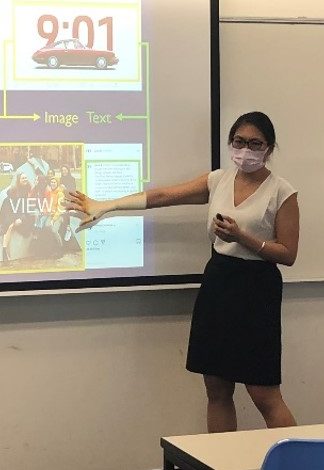
Element size is a fundamental feature of all visual communications, yet we lack definitive knowledge about whether to maximize picture or text size and how to balance the emphasis of these elements. Leveraging deep learning-based computer vision techniques, we measure and analyze the element sizes of more than 4,000 cover photos on Facebook. Based on the results of multivariate regression models with random effects, we find that enlarging pictures (relative to text) in cover photos produces more 'likes' for the Facebook pages that extensively embed text in pictures but results in a negative impact for the pages that avoid using text in pictures. Relatedly, enlarging pictures has a positive impact when the brand is high-end and product involvement is high. However, the effect reverses for low-end brands and low-involvement products. Two experiments supplement the findings from the field. This research elucidates the boundaries of picture superiority and has strategic implications for visual optimization and content strategies.
Knowledge sharing is essential to the competitiveness and survival of multinational corporations (MNCs), particularly in today's highly globalized knowledge-based economy. MNCs often employ expatriates as knowledge agents to disseminate and transfer critical knowledge from the parent organization to its host country operations and vice versa. However, despite the proliferation of international assignments, knowledge sharing between expatriates and host country national (HCN) colleagues continues to be problematic, particularly when individual differences (e.g., in terms of culture, nationality, ethnicity, language) between the expatriate and HCNs are pronounced. This study aims to reveal how the knowledge sharing process between expatriates and HCNs can be enhanced despite the presence of such differences. Drawing on the self-expansion theory we propose that an expatriate's empowering leadership style will enhance HCN knowledge sharing via a self-expansion process. In addition, we propose that HCNs' cross-cultural competence acts as an important enabler of this process. Implications for research and practice are discussed.
Acknowledgement: The work described in this presentation is fully supported by a grant from the Research Grants Council of the Hong Kong Special Administrative Region, China (UGC/FDS16/B06/19).

Self-serving nepotism has often been considered detrimental to the financial prospect and survival of family firms. Referring to the agency, stewardship, and embeddedness perspectives, this paper investigates nepotism in compensation arrangements for family-member CEOs. Based on a sample of Chinese listed family firms, this research shows that a CEO is more likely awarded a pay premium for being a 'nepot' (a family member) in a firm with high family embeddedness (as measured by family board representation). The inclination for nepotistic compensation is greater in a family firm located in the region marked by the rice subsistence subculture (as opposed to the wheat and herding subsistence subcultures) and in the region characterized by non-Mandarin sociolinguistic subcultures (as opposed to the Mandarin sociolinguistic subcultures). Moreover, the positive association between the pay of a family-member CEO and family board representation is more pronounced when the CEO is politically connected. This research suggests that family embeddedness, cultural embeddedness, and political embeddedness should be considered in future nepotism research.
This study contributes to the growing literature on organizational political ideology by positing that acquiring firms choose targets with similar organizational political ideology in their effort to retain employees postmerger. Using a sample of M&A announcements in the United States from 1996 to 2014, we find a positive relationship between the similarity of political ideologies of the merging organizations and the likelihood of M&A announcement. In addition, we find that our main relationship is stronger the more homogeneous the organizational political ideology of the acquirer, and the more the human capital intensity of the merging firms. In addition, we find support for the proposed mechanism that drives the main relationship. We thus introduce the concept of organizational political ideology into the debate over the influence of organizational values in M&As, and we extend the theoretical application of political ideology to settings with inter-organizational partnerships.
The COVID-19 reported initially in December 2019 led to thousands and millions of people infections, deaths at a rapid scale, and a global scale. Metropolitans suffered serious pandemic problems as the built environments of metropolitans contain a large number of people in a relatively small area and allow frequent contacts to let the virus spread through people's contacting with each other. The spread inside a metropolitan is heterogeneous, and we propose that the spatial variation of built environments has a measurable association with the spread of COVID-19. This paper is the pioneering work to investigate the missing link between the built environment and the spread of the COVID-19. In particular, we intend to examine two research questions: (1) What are the association of the built environment with the risk of being infected by the COVID-19? (2) What are the association of the built environment with the duration of suffering from COVID-19? Using the Hong Kong census data, the confirmed cases of COVID-19 between January to August 2020 and a large size of built environment sample data from the Hong Kong government, our analysis are carried out. The data is divided into two phases before (Phase 1) and during the social distancing measure was relaxed (Phase 2). Through survival analysis, ordinary least squares analysis, and count data analysis, we find that (1) In Phase 1, clinics and restaurants are more likely to influence the prevalence of COVID-19. In Phase 2, public transportation (i.e. MTR), the public market, and the clinics influence the prevalence of COVID-19. (2) In Phase 1, the areas of tertiary planning units (i.e., TPU) with more restaurants are found to be positively associated with the period of the prevalence of COVID-19. In Phase 2, restaurants and public markets induce long time occurrence of the COVID-19. (3) In Phase 1, restaurant and public markets are the two built environments that influence the number of COVID-19 confirmed cases. In Phase 2, the number of restaurants is positively related to the number of COVID-19 reported cases. It is suggested that governments should not be too optimistic to relax the necessary measures. In other words, the social distancing measure should remain in force until the signals of the COVID-19 dies out.
The model of goal-directed behavior (MGB) has been widely utilized to explore consumer behavior in the fields of tourism and hospitality. However, prior studies have demonstrated inconsistent findings with respect to the relationships of the MGB variables. To address this issue, we conducted a meta-analytic review based on studies that had previously applied the MGB. Moreover, we compared the cultural differences that emerged within MGB. By reviewing and analyzing 37 studies with 39 samples (N = 14,581), this study found that among the relationships within MGB, positive anticipated emotion was the most influential determinant in the formation of consumer desire. In addition, different patterns of relationships between Eastern culture and Western culture were identified within MGB. This article is the first meta-analysis to address the application of MGB in tourism and hospitality and, thus, contributes to the theoretical advancement of MGB.