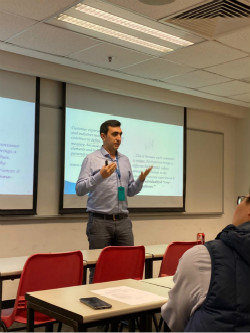

The current study was designed to replicate previous research findings by Eldar Shafir (1993) giving evidence that the framing of a choice, in terms of choosing or rejecting, influences the outcome of the decision. The study proposed that, in line with the principle of compatibility, positive aspects of options loom larger when one is choosing and negative aspects of options loom larger when one is rejecting. Subjects (N = 1092) were presented with eight problems that presented a choice between options whereby one option had both more pros and cons (enriched option) than the other options consisted of largely neutral features (impoverished option). In the original study across eight problems, the proportions with which enriched option was chosen (in choice frame) and rejected (in reject frame) exceeded the expected 100%, and furthermore, proportions of subjects choosing enriched option exceeded while choosing than during the rejecting decision frame. The replication failed to consistently replicate these findings across eight studies. Furthermore, the authors tested for 'Accentuation hypotheses' proposed by (Wedell, 1997) as an alternative to compatibility principle. The replication results were consistent with the accentuation principle.


The research formulates theory on the interplay between levels and scope of board diversity and innovation, and generate three main insights. First, it theorizes diversity in scope (gender, age, type of experience, and type of expertise) facilitates innovation, and particularly in industries characterized as high-tech and male-dominated. Second, diversity in levels (amount of expertise, and amount of experience) is less important for innovation and even potentially detrimental. Third, firms with greater diversity of scope generate more value-enhancing innovation. The empirical tests, based on large sample evidence from the world's leading patent producing nation – China – are largely consistent with these hypotheses.

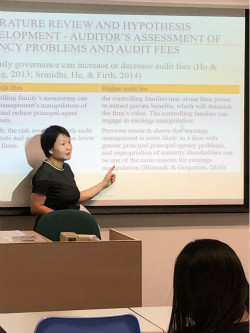
Diversity, which is suggested as a way to enhance corporate governance, has become a public concern in the past few decades. This study examines the impact of board and audit committee diversity (gender, ethnicity, age, and education) on the level of fees paid to audit firms using a balanced panel of listed firms in four Asian markets – Hong Kong, India, Malaysia, and Singapore. A more diverse board or audit committee with the inclusion of females, international directors, and directors of different education levels is a more effective monitor. The results indicate a relationship between various diversity dimensions and the demand for audit coverage, as reflected in the levels of fees. However, each dimension of diversity results in variation of fee levels in different aspects. The findings on the complementary and substitution effects between internal and external monitoring mechanisms are useful for firms in devising an appropriate mix of governance strategies. This research deepens current understanding of the diversity literature and provides insights for policy-makers about corporate policy relating to gender diversity, internationalization and the education requirements of directors and board committee members.

China's outward FDI reached a peak in 2016, making it as important a foreign investor as Germany, France and the United Kingdom. In this seminar, we investigate the main motivations behind Chinese investments in developing countries, Central and Eastern Europe (CEE) in particular. Although the size of Chinese investment in CEE is small, the region is strategic for China as it is a gateway into Western Europe under the Belt Road Initiative. As new or future members of the EU, the CEE countries also provide access to the single market. We find that the motivations to invest in developing countries differ according to regions. Based on outward FDI data provided by the Chinese authorities, the number of Chinese FDI greenfield and M&A projects from Financial Times and Zephyr respectively, as well as face-to-face interviews with companies with investments in CEE, we find that for the case of CEE, domestic markets, access to the larger EU market, strategic assets like technology and prior relationship with the CEE are main reasons for investing.

The popularity of cause-related marketing (CM) is due to its wider acceptance and people's attitude towards corporate social responsibility. Prior research studies have showed that people prefer to buy from socially responsible companies (Strahilevitz 1999, Lichtenstein, Drumwright, Braig 2004, Arora and Henderson 2007, Winterich and Barone 2011). However, how can the company improve the effectiveness of CM campaign without significantly increase in cost? This study proposes that by merely allowing customers to have input in the CM campaign can influence their attitudes and responses toward the CM campaign concerned, particularly if their intention to purchase the product tied to the CM campaign. It is postulated that higher customer input will lead to higher purchase intention. An experimental study is proposed to evaluate the possibility of this effect and also to investigate the mechanism underlying this effect. We speculate that the above effect is mediated by perceived effort.
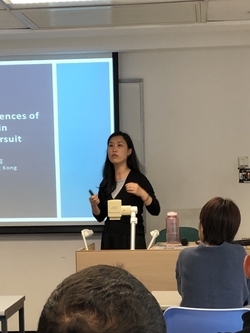
Previous research has stressed the emotional consequences of receiving help. The current research complements the extant research by examining the motivational consequences of receiving help in consumer goal pursuit. We propose that receiving help during goal pursuit may increase or decrease consumers' subsequent motivation, depending on whether the help is perceived as an integral part of the resources available for goal pursuit. When consumers consider the help as resources that are readily accessible, they believe that their pool of resources available for goal pursuit is enlarged. Hence, they have greater expectations of goal attainment, resulting in greater motivation. Conversely, if consumers consider the help as extraneous resources that its future availability is uncertain, they have lower expectations of goal attainment and hence show lower subsequent motivation.