Publishing in Top Journals: Common Problems and Solutions
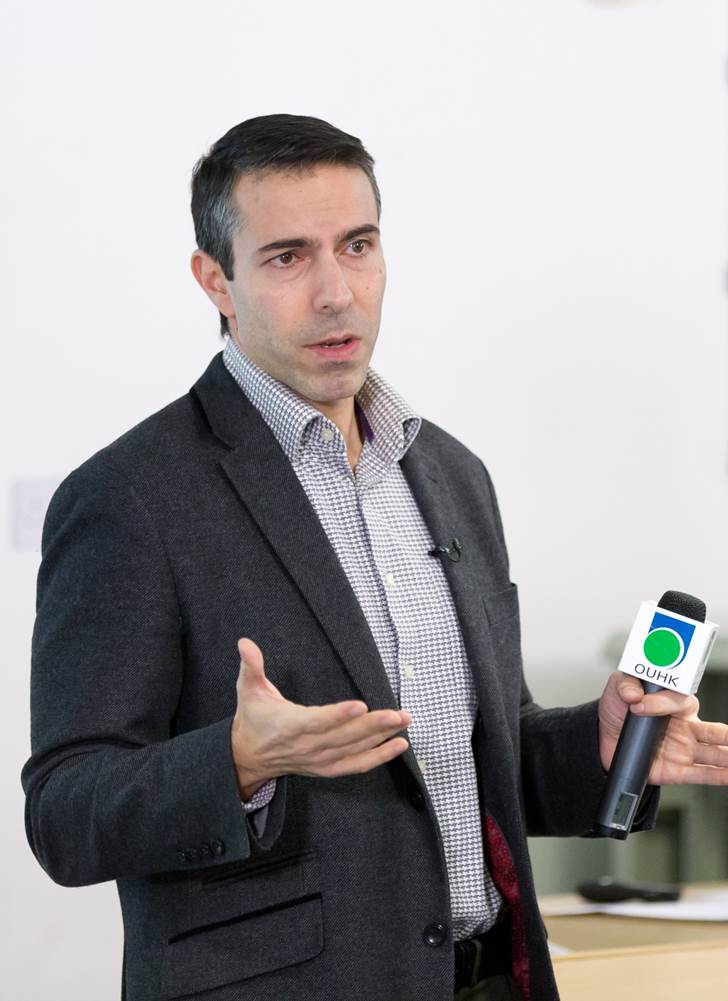
Professor Mario Kafouros
IIBG Distinguished Professor, Professor of International Business and Innovation, Leeds University Business School, UK
21 Dec 2016
This seminar considered a wide range of problems and limitations that can get papers rejected from good international journals. Professor Mario Kafouros also presented how authors could overcome some of these challenges and in turn increased the chances of getting published in good journals and making studies more impactful.
Knowledge Exploration/Exploitation and Its effects on Firm Performance
Mrs Eva Mavroudi
Leeds University Business School, UK
21 Dec 2016
Prior research emphasized that firms should pursue both knowledge exploration and exploitation in order to enhance their innovation performance and competitiveness. This seminar focused on a current study that examined whether and when firms should specialize in exploration or exploitation activities internally, and proposed that industry orientation influenced the effects of specialization strategies on firm performance. The results, based of the analysis of a panel dataset of 37,945 firms, showed that pursuing an exploitation strategy affected negatively performance when firms operated in an exploitative-oriented industry. Conversely, pursuing an exploitation strategy affected positively performance when firms operated in a hybrid or in an exploratory-orientated industry. It was shown that this pattern depended on the orientation of the industry in which a firm operated. The latter affected the availability of potentially complementary exploitative- and explorative-opportunities that firms were exposed to, the value of such opportunities, and the transaction costs of accessing them.
The Value of Intangible Assets in Different Institutional Environments
Professor Mario Kafouros
IIBG Distinguished Professor, Professor of International Business and Innovation, Leeds University Business School, UK
16 Dec 2016
This seminar focused on research that has recognized the advantages of ownership ties by identifying what determines the effectiveness of ownership in enhancing firm performance. It was contended that performance variations arise because each focal firm was partially or fully owned by multiple organizations that differ in the intangible assets they possess, in the countries from which they originated and, therefore, in how much they could help the focal firm generate rents. The analysis of over 22,000 observations across 23 countries explained why and how the rent-generating potential of such intangible assets changed when they were deployed in countries that differ in their institutional development and when the focal firm's institutional context differed considerably from that of the organizations that owned the intangible assets.
Publishing in High Quality Journals
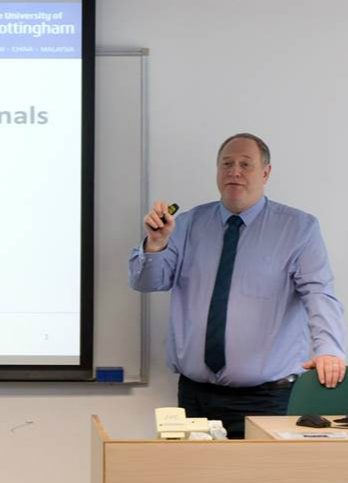
Professor Graham Kendall
IIBG Distinguished Professor, Professor of Computer Science, The University of Nottingham, UK
24 Nov 2016
This seminar focused on how you can prepare yourself to publish the results of your scientific research in high quality journals. The seminar discussed topics such as identifying what journals to target, how to write the paper, how to submit the paper and how to respond to reviewer's comments.
Managing Coopetition
with Employees: A Knowledge-Appropriation Perspective
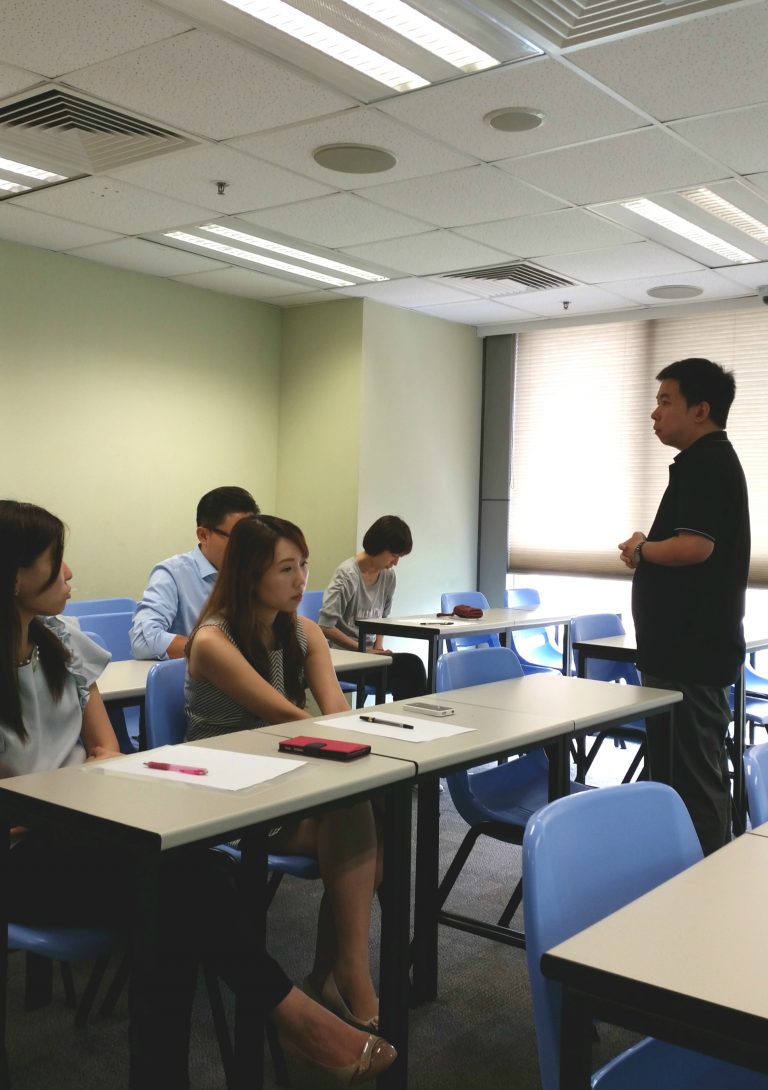
Dr Eddie Law
Assistant Professor, Lee Shau Kee School of Business and Administration, Hong Kong Metropolitan University
24 Aug 2016
This seminar was based on a paper which conceptualizes the management of knowledge appropriation tensions between a firm and its employees as an important manifestation of coopetition management. The seminar addressed the deficiencies of the knowledge management (KM) literature in analyzing the nature and dynamics of different knowledge appropriation strategies and the coopetition literature in examining the coopetitive relationship between a firm and its employees. Theoretical propositions were developed to illustrate how the firm's adoption of a tighter appropriation regime (i.e. a more competitive approach) vis-à-vis a looser appropriation regime (i.e. a more cooperative approach) would affect its coopetitive relationship with the employees and subsequently its long-term KM and innovation performances.
Stock Return Anomalies
from Ending-digit Effects Around the World
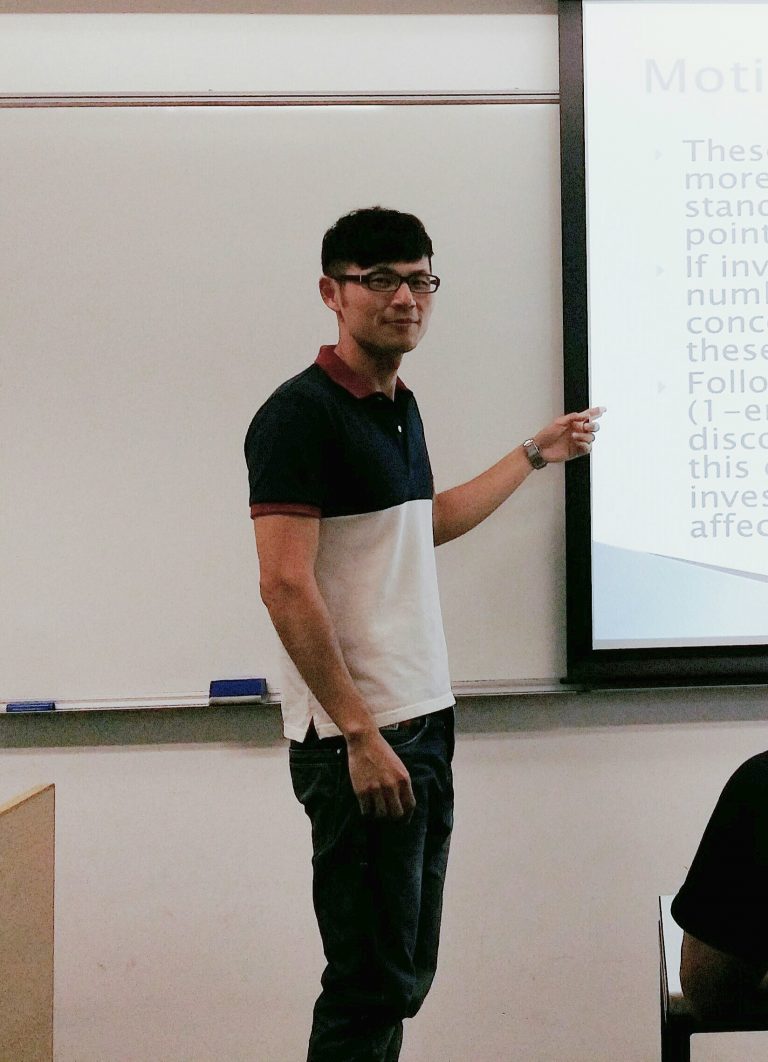
Dr Toro Chen
Assistant Professor, Lee Shau Kee School of Business and Administration, Hong Kong Metropolitan University
10 Aug 2016
Using extensive daily data from 68 countries, the seminar speaker found excess buying when prices started to surpass the zero-ending threshold (i.e. when the ending digit is 1) as it was perceived by traders as the beginning of an upward momentum. This led to abnormal positive return for all price points one penny above the zero-ending round number. In contrast, there was excess selling when prices started to drop below the zero-ending threshold (i.e. when the ending digit is 9) which resulted in abnormal negative return for all price points one penny below the zero-ending round number. This ending-digit effect remained robust in various sub-samples classified according to country characteristics or industry characteristics.
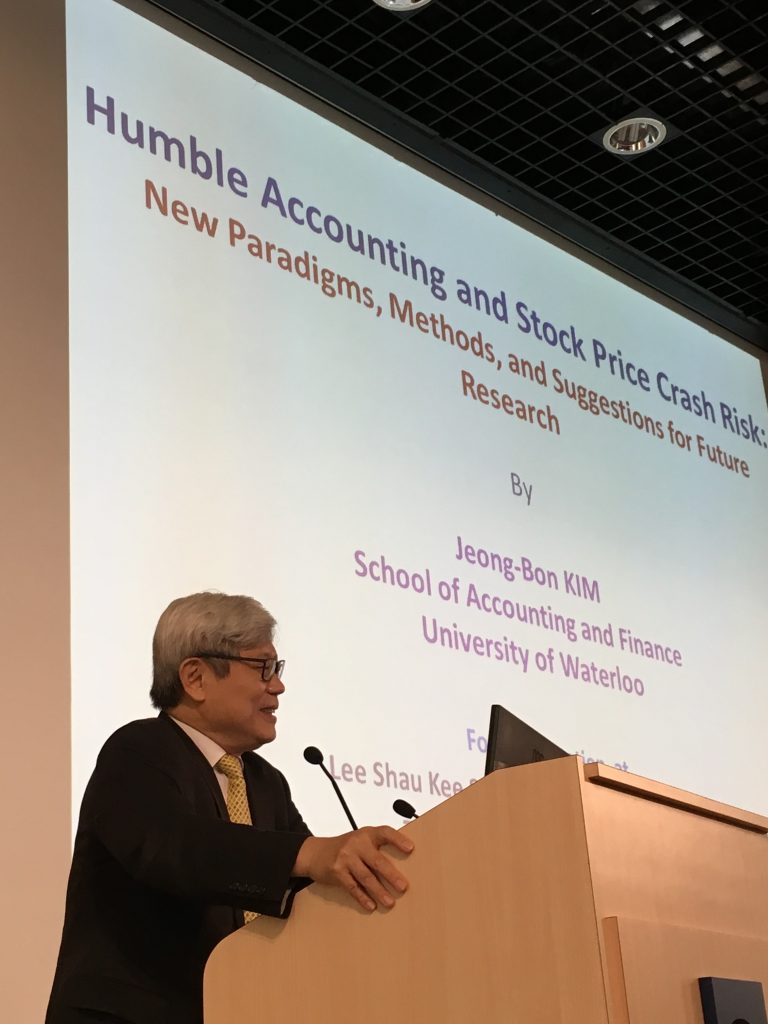
Humble Accounting and Stock Price Crash Risk: New Paradigm, Methods, and Suggestions for Future Research
Professor Jeong-Bon Kim
IIBG Distinguished Professor, Professor & Wadsworth Chair in Accounting & Finance, Ph.D. Program Director, School of Accounting and Finance, University of Waterloo, Canada
27 May 2016
Professor Kim began by discussing the role of accounting in our society and humble accounting as a means to control downside risk. Using the impact of accounting conservatism on stock price crash risk as an example, he introduced a new paradigm for accounting research – the third moment approach. Fruitful areas for future research in accounting were also introduced.
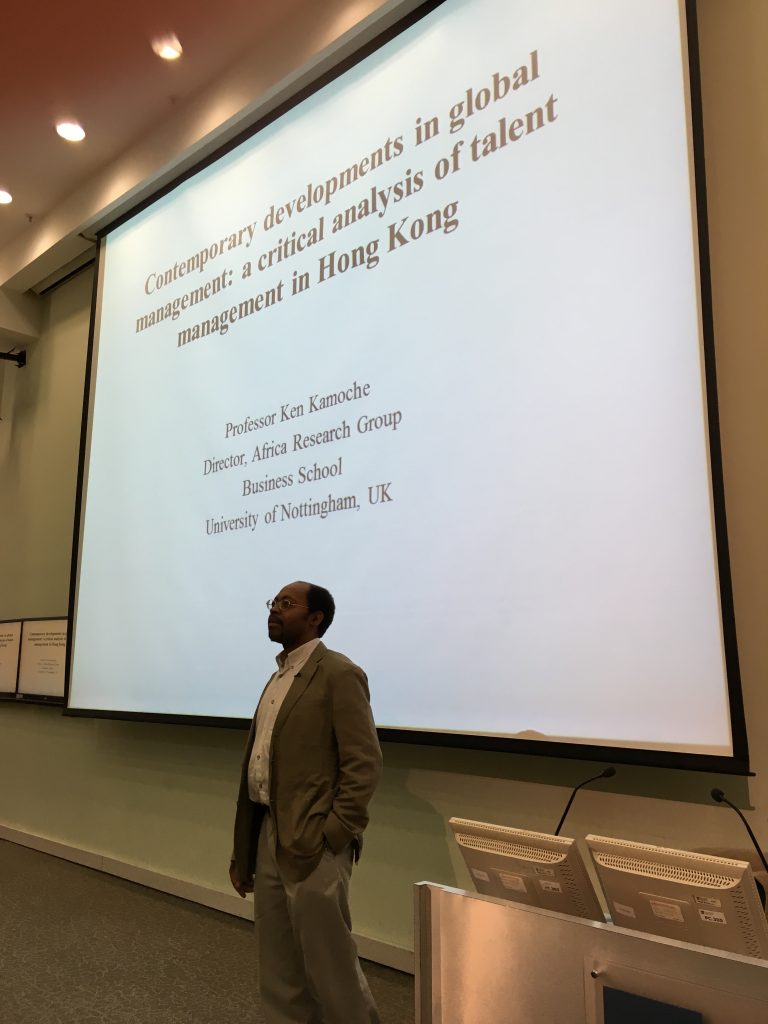
Contemporary Developments in
Global Management: The Talent Management Challenge
Professor Ken Kamoche
Professor of Human Resource Management and Organization Studies, Nottingham University's Business School, UK
24 Feb 2016
The seminar provided a broad overview of the current scope of globalization and examined how the challenges in the management of people might be addressed by 'talent management'.
Do Political Connectedness,
Government Subsidy, and Free Trade Zone Matter to Internationalization?
Dr Leung Tak Yan
Assistant Professor, Lee Shau Kee School of Business and Administration, Hong Kong Metropolitan University
20 Jan 2016
The seminar explored the factors which lead to export success, focusing specifically on government-related support and subsidy, political connectedness, and the establishment of a free trade zone.
Attitude towards Hong Kong Outbound
Tourists' Tipping Policy between Tour Escorts and Tour Participants
Ms Winnie Chiu
Assistant Lecturer, Lee Shau Kee School of Business and Administration, Hong Kong Metropolitan University
20 Jan 2016
The seminar focused on the perceptions of the current and proposed tipping policy from the perspectives of tour escorts and tour participants. Using the qualitative methodology of content analysis, a notable divergence was revealed in views on the present tipping policy and its implementation between the tour escorts and tour participants.