Financial research is often criticised about being too esoteric, overly technical and lacking wider influence. Changes in funding criteria, university ranking processes and teaching practices has meant that researchers are required to focus more on the impact of their research within and beyond academia. This presentation discusses how impact is defined within the Research Excellence Framework (REF), the system for assessing the quality of research in UK higher education institutions. It then considers how this thinking has motivated three interdisciplinary financial research agendas with a strong impact focus. The first explores issues around the cost of capital in utilities and a project aiming at developing a financial observatory for regulated firms in the UK and internationally. The second looks at how ideas from financial markets and econometrics can be applied to understand the empirical behaviour of online review marketing data. The final agenda relates to an action research project of designing evidence-based policies for the development of a cluster of financial services firms.
This study examines the fracture in the world economy and three of its consequences – the reshaping of international competition, rising VUCA and the impact on innovation. It examines the theoretical challenges at all levels of international business research from the global system to individual tasks, using a uniform set of principles based on internalization theory. It concludes by examining the impact of COVID-19.
It is hoped that, despite the challenges that COVID has presented, and will continue to do so, we can see opportunities that will enable us to continue carrying out high quality research that has real impact.
It has long been established that firms' ability to profit from their technologies depends on the strength of IP laws. This study shows that profiting from technology is also determined by how effectively firms engage in patent infringement litigation (i.e. take legal action against their rivals) to create isolating mechanisms and protect their technologies. The study also shows that patent infringement litigation is characterized by industry and geographic specificity that affect (disproportionately) revenue-generation and costs and, therefore, its net effect on firm profitability. By identifying contingencies that influence the economic returns from patent litigation, the study helps us understand why innovative firms experience different profitability outcomes.
Firms that conduct R&D in multiple countries face the daunting challenge of dealing with cross-country variations in intellectual property rights (IPR) protection. We examine how two technology-protection mechanisms, namely, geographic fragmentation of R&D (cross-country fragmentation of R&D) and IPR heterogeneity (conducting R&D in both strong and weak IPR protection countries), enable firms to protect their technologies from imitation, while also accessing external knowledge, and therefore improve their productivity performance. Evidence from a longitudinal analysis of 564 R&D units located in 47 countries provides support for the effectiveness of IPR heterogeneity as a technology protection mechanism, but shows that geographic fragmentation of R&D is not effective when IPR heterogeneity is controlled for. Our analysis also suggests that weaker IPR protection enhances the effects of both external knowledge and the firm's own R&D on its performance. Overall, our study enhances understanding of conducting R&D in multiple countries explains why some firms benefit from conducting R&D in weak IPR protection countries while other firms do not, identifies which mechanisms are effective in protecting technology, and challenges the prevalent view that weak IPR protection is disadvantageous for firm performance.
Our study aims to contribute to the debate on the quality of open access publishing by comparing research in different journals and by examining its impact on quality research. With a systematic literature review, we analyse 25 years of Green Human Resource Management (Green HRM) research (1995-2019). We chose Green HRM as an appropriate case, because although it is a rapidly growing area of research, the number of journal publications is limited and thus the whole literature in the field over a 25-year period could be covered. By looking closer at the journals where Green HRM research is published, we present characteristics of two broad categories of research qualities. Counter to our expectations, we do not only show that papers published in quality journals have an impact on papers published in questionable (so-called “predatory”) outlets, but also the other way around. Through citations, questionable research contributes to the success of quality publications. Moreover, we even observe that articles published in quality journals legitimize articles from predatory journals by using this questionable literature as references. Although our empirical sample mainly consists of one specific area of research, we suggest that our findings can be generalised to other areas of management research. Therefore, we close our study by giving practical implications to different stakeholders and a general plea for more awareness and responsibility.
The tourism sector contributes significantly to the GDP of many countries. This sector is responsible for millions of service sector jobs as well as an inflow of foreign exchange. COVID-19 has affected the tourism industry the worst as it is the first industry to be closed and perhaps the last to be re-opened. Upon re-opening however, there will be an intense competition among countries to attract foreign tourists. One well-known policy to attract international tourists is the hosting of sporting events. Hosting mega sports events like the Olympics and FIFA World Cup are said to leave a legacy that could impact the attractiveness of a country/city in the long term. However, the opportunity to host and failure to seize the opportunity to host these mega-events can both be expensive. The Tokyo Olympics was supposed to reinvigorate Japan's economy but now the postponement may cost Japan (est. US$18 billion) more than the spending ($US12.6 billion) on organizing the mega-event. In this paper, we consider the economic impact of hosting annual international sporting events, specifically the extent to which Formula-1 Grand Prix, ATP Tennis and PGA Golf. These leagues have already resumed play in the less affected locations to make up the revenue that’s been lost during the pandemic. Using monthly data from 1998 to 2019 and the Seemingly Unrelated Regression Estimates (SURE) we show that the effect differs from one sport to another within a country, and the same sport across countries. We conclude that there is no “one-size-fits-all” strategy when it comes to hosting these annual international sporting events. Policy-makers must consider carefully the sport that offers the best chance for driving recovery and supporting travel and tourism sector.

Real estate is a critical component of the economy. As a major part of household consumption and wealth, the maintenance of the equilibrium influences significantly the health of the economic environment. Using the data of Global Property Guide, this research develops an extensive study on the impact of real estate markets on stock markets over 16 countries for more than 300 Real Estate Investment Trusts (REITs). The study starts from country-level to continent-level whilst exposes the movement between the real estate and stock markets. The findings show the significant different movement across continents. This is the valuable information for the governments to review the real estate market and overall economy policy.

Well-being is made as a global concept which is generally significant to everyone. Nevertheless, this study challenges the presumed universality of well-being. Given the assumption that underlies the notion is individualism, well-being is conceivably less applicable to a Chinese who regards family as part of self. Although a Chinese expression, xing fu幸福 is often considered as an equivalent to well-being (Davis, 2005; Lu, 2001; 2010), the two concepts are culturally distinctive (Ng, 2017). This study aims to explore the relevancy of well-being and xing fu in a Chinese context. A research question is formulated: How do members of family businesses in Hong Kong draw upon the discourses of well-being and xing fu in their daily lives? To answer this question, an anthropological examination is carried out. The findings indicate that rather than spontaneously expressing well-being, the research subject showed a more salient concern on xing fu. In the discussion, xing fu is further contextualized and its differences with well-being are examined. In general, the study contributes to knowledge by bringing in an indigenous perspective into the discursive space.

An accurate forecast for corporate default risk is crucial for financial institutions to effectively quantify potential expected and unexpected borrower losses. This study develops a logistic regression model to simultaneously examine the roles of firm-specific fundamentals and economic outlook in predicting corporate default risk. The model is estimated using U.S. listed non-financial firms over the 1997⎼2009 period. The empirical findings suggest that economic outlook captured by recession probability forecast, firm-specific fundamental factors measured by the Z-score and F-score, and the interaction between economic outlook and firm-specific fundamental factors play statistically significant roles in predicting bankruptcy risk. The model exhibits relatively high levels of goodness-of-fit and classification ability, and low levels of forecast error.
The governments and pro-environmental groups have been calling the public for taking actions to combat climate change. Many consumers, however, do not seem to 'walk their talk'. It is widely reported that the adoption of greener consumption patterns lags behind the growth of pro-environmental concerns among consumers. While the governments and the businesses have been promoting the success in various pro-environmental campaigns on media, do young people increasingly assign environmental responsibilities to governments and businesses rather than to themselves? Would the triumphs over the climate change lead to a lower sense of anxiety and/or responsibilities and thus weaker their pro-environmental intention? Or would the success stories fuel their self-efficacies in combating climate change and also their intention to act more pro-environmentally? While a growing research body has indicated the positive impact of self-efficacy on people's pro-environmental intention, research on how self-efficacy, the governments' efficacy and businesses' efficacy interact in shaping pro-environmental intention among young people has been virtually missing. Attempting to gain some insights for theorising, 9 focus groups were conducted to investigate young people's sense of responsibilities for the climate change, and their perceived responsibilities as well as the efficacies of the government and the business sector. Our analyses based on 34 participating university students indicate that the effects of governments' and businesses' efficacies on young people's pro-environmental intention are fundamentally complementary instead of compensatory. We also suggest that the relationship is mediated by self-efficacy. It is also worth noting that a strong sense of distrust of the businesses' interest in slowing down environmental degradation and disappointment with the strength of the governmental efforts in promoting environmental and social sustainability. The study ends with implications for theory, practice and future research directions.

This study constructs a transcendental logarithmic cost function for describing the production technology of banks. Rather than adopting traditional approaches, this study develops a new approach to specify the essential outputs and inputs of banks. It has been found that banks had to tolerate higher operating costs in the first few years after the removal of regulations. In response, banks sought for new revenue by expanding fee-based financial services rather than reduced operating costs by adjusting their input combinations or output combinations. The deregulation also forced banks to pursue active technical progress, and larger banks performed better than smaller banks.
Fintech is a short word for financial technology. Fintech companies use specific software in computers and smartphones to help business or consumers to manage their operations and lives more efficiently and effectively. Fintech companies consist of both startups and established financial institutions and technology companies trying to replace the financial services provided by current financial counterparts.
In this study, we investigate the performance of China fintech companies which were listed in Hong Kong Stock Exchange, New York Stock Exchange and NASDAQ from 2015 to 2019. The main research question is “Are China-based fintech companies overpriced at IPO?”
Writing assessment is an essential part in both school-based examinations and high-stakes assessments. Fairness of assessments may impact on the academic development of students in various levels. The study aims to investigate the analysis of the Many-facets Rasch Measurement (MFRM) to adjust for prompt difficulty and rater severity and whole-instrument replication to perform an appropriate assessment of the precision of the writing assessment. The MFRM is an extension of the Rasch measurement which has been used to examine and enhance test fairness over the past decades. The practical benefits of utilizing the Rasch model have been found in the field of language assessment. The results revealed that some discrepancies were found among raters who scored student essays in this study. Then a procedure was adopted to give more choices for the moderation of scoring in writing assessment and enrich the quality of learning and teaching strategies.
This study examines the effect of coaching style on individual knowledge creation as motivated by the lack of integration work between two popular organizational phenomena – coaching and knowledge management. Theoretical propositions have been developed to explicate the differential effect of guidance coaching and facilitation coaching on coachee's knowledge creation behavior. Theoretical contributions of and directions for future research generated from the current study were rigorously discussed.
In pursuing a goal, some people find it meaningful as long as they have tried their best, regardless of the final outcome. On the other hand, some people find it does not count anything at all if the end product is not good. Despite the popularity of the concept, no standard measurement has been developed to measure the individual difference in whether people derive meaning from the effort they paid or from the outcome they received in goal pursuit. In the present research, we developed the meaning orientation scale to capture this concept and examined its predictive validity and incremental validity of the scale. In Study 1, we generated a 10-item meaning orientation scale and found that it was related to motivation of goal pursuit. In Study 2, we found that it was related to grit scale and tenacious goal pursuit scale, over and above the learning goal and performance goal scales. Distinction between this new scale and the existing scales were also discussed.
Limit order books (LOBs) have been widely adopted as a trading mechanism in global securities markets and the degree of LOB transparency is one of the most studied topics in market design. This study investigates the information content of LOB data from 10 selected Hong Kong stocks. The LOB data are first divided into two data sets – the anonymous LOB and broker IDs in the bid and ask queues, and deep learning is employed to evaluate and compare the price movement predictability of both data sets. The result indicates that the overall prediction performance solely based on broker ID data set can reach, on average, 87.65% that of the anonymous LOB data set. The contributions of this paper are two folds. First, a machine-learning based tool for finance researchers is proposed to quantitatively measure the price predictability of LOB features, and an empirical study is conducted on the impact of LOB transparency on traders' profitability. Second, the empirical result strongly suggests that the broker ID queues in the LOB consist of significant information content for price prediction and it provides insights for regulators to determine the appropriate degree of LOB transparency so as to enable a fair market design for all investors.
Due to the unprecedented effects of the COVID-19 pandemic and the rapid change in market demand and information technology, tourism firms have scrambled to engage in service innovation to deal with technology turbulence. Drawing from cognitive dissonance theory, this study examines the effect of market and technology turbulence on employee service innovation. First, we propose employee openness represents cognitive consonance, and resistance to change to represents cognitive dissonance processes that mediate the relationship. Second, we also propose that the above relationships will be moderated by crisis leadership efficacy. Using multi-source data from both service employees and their immediate superiors, along with a two-phase data collection process, we found that employee openness and resistance to change mediates the relationship between market and technological turbulence and service innovation. Furthermore, the findings reveal that crisis leadership efficacy strengthened the relationships (both direct and indirect, via openness and resistance to change) between technological turbulence and service innovation. Implications for theory and practice for tourism scholars and practitioners are discussed.
People tend to take no action when presented with a preselected default among the choices in a decision-making scenario. In two well-powered samples (N = 1920), we conducted a close replication this default effect (Johnson & Goldstein, 2003) and the configuration of framing and defaults effects on preference construction (Johnson, Bellman & Lohse, 2002). We successfully replicated Johnson and Goldstein’s (2003) findings on default effects in a organ donor scenario. In replicating Johnson, Bellman, and Lohse’s (2002) study, we found strong support for framing effects, but the results failed to provide support for default effects. Our results suggest that the stability of default effects depends on the framing of the decision scenario. We discuss implications for research on default effects and call for further contextualized understanding in future research.

The intangible cultural heritage of an area can uniquely position it as a tourism destination and fuel a lucrative tourism industry. However, because the literature on heritage management is primarily place-focused, a limited theoretical understanding of the relationship between intangible cultural heritage and tourism development is noted. Mass and unplanned tourism can harm city destinations by promoting inauthentic tourist encounters and cultural commodification. Thus, tourism planners need to develop strategies for preserving the intangible qualities of the cultural heritage sites they develop for tourism consumption. The present study focuses on how intangible cultural heritage items can be leveraged to enhance tourism planning and development. A case study of Cantonese opera will be conducted using grounded-theory and a qualitative methodology. The findings will have significant theoretical and practical implications for tourism destinations.


Previous research has shown that food labels influence consumption decisions by changing inferences on food. Extending this stream of research, we suggest that food labels also influence food choice through consumers' motivation to convey a desired image to others. Specifically, we suggest that when female consumers are motivated to impress others in social settings, they strategically choose low-calorie-labeled food. Across multiple experiments, including a field experiment conducted during job interviews, we demonstrated that low-calorie labels increase choice share of the labeled food or drink when consumers make choices with other person whom they want to impress, but not when they make choices alone. We show that this is driven by motivation to signal one's competence through choosing low-calorie-labeled food. Those who believe that food consumption reflects one's inner qualities are more likely to choose low-calorie-labeled options to impress others. Consumers indeed evaluate others as more competent when their choices are labeled (vs. not labeled) as low-calorie. The choice of low-calorie-labeled food is driven by specific motivation to signal one's competence, but not necessarily other positive traits.

Visual space is an important component in marketing communications. While prior research has focused on the impacts of visual space on consumer perception and judgment, the present article provides converging evidence that the amount of space allocated around the display of a choice set (i.e., the margin of a given choice set) affects consumer choice and deferral. We contend that when the margin of a choice set (e.g., blank areas of an online shopping website) is substantial, consumers are more likely to bring to mind outside alternatives that are not immediately available in the given choice set. By preventing consumers from thinking of outside alternatives, a narrow (vs. wide) margin increases choice and reduces deferral. Results from six studies support the proposed effect. Our findings also confirm that this effect is mitigated when the decision context involves a single option instead of multiple options.




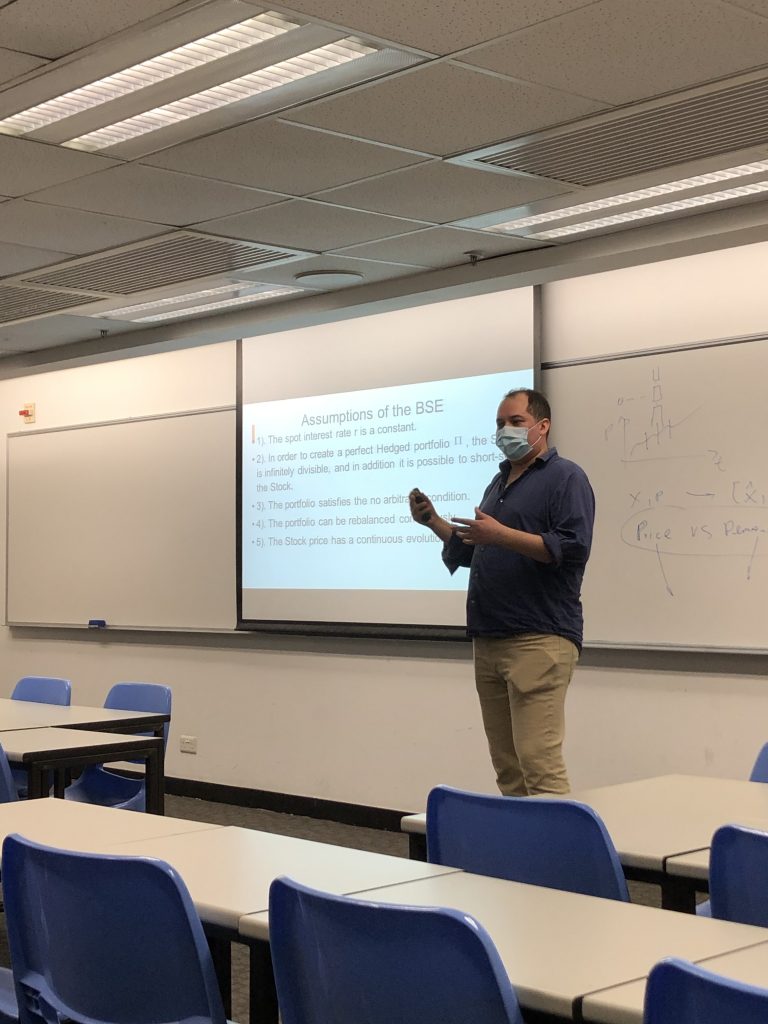
In this seminar, some general methods employed for analyzing a few important problems in the stock market, as well as other areas, were explained. Some important results obtained were then illustrated, including:
Volunteer tourism has been growing rapidly since the last decade. However, similar to other forms of tourism, volunteer tourism has been criticized for its increasingly commodifying development. In order to facilitate a decommodified approach in volunteer tourism, it is crucial to empower local communities and understand their needs, including their perceptions and attitudes towards volunteer tourism. Social representations have been used to examine community members' ideas, their perceptions and the ways they think about tourism development. However, how local communities perceive alternative forms of tourism, including volunteer tourism have been underresearched. Using qualitative interviews with local residents in Mongolia, one of the post-Soviet countries and a fast-growing volunteer tourism destination in the world, this research examines host communities' general understanding and attitudes towards volunteerism and volunteer tourism development based on the perceived impacts, and considers how the social constructions of volunteerism underpin local residents' perceptions of volunteer tourism. In addition, by investigating the historical and cultural influences in the host community, this study aims to pinpoint the relationship between social representations and cultural influences, offering an interesting insight to understand volunteer tourism development.
Game riskiness is a way to quantify the risk in prisoner's dilemmas (PD) such that the riskiness of cooperation is defined by the variance of outcomes of cooperation relative to that of defection. When the variance of cooperation is larger (smaller) than that of defection, the PD is labelled as a cooperation-more risky PD (defection-more-risky PD). The present study extends the previous work on game riskiness by examining its moderating role in the effect of expectation of cooperation on cooperation rate under various mixed-motive situations. We found across four studies that game riskiness moderated the effect of expectation of cooperation on cooperation rate such that the effect of expectation of cooperation on cooperation rate was larger in cooperation-morerisky PDs than in defection-more-risky counterparts. This moderation effect was observed in N-person PD such that participants made decisions in PDs in groups of three to six (Study 1), PD in both gain and loss domain such that participants earned or lost money in PDs respectively (Study 2), PD where the expectation of cooperation was manipulated instead of measured (Study 3), and real-life situations (Study 4). We also illustrated mathematically that game riskiness is related to other established indices of PD, including the index of cooperation, fear index, and greed index, and we found empirically that the greed index also moderated the effect of expectation of cooperation on cooperation rate. This study identified game riskiness as a robust situational factor that can impact decisions in social dilemmas. It also provided insights on the underlying motivations of cooperation and defection through examining different indices of PD.
Although countries across the globe derive a large part of their Gross Domestic Product (GDP) from the tourism industry, the alarming rate of crisis has limited the contribution of tourism to the macro-economy. Since the occurrence of crisis is an inescapable phenomenon of the industry, tourism scholars have investigated several crises related to economic, health, political, and environmental issues. However, studies in such a stream have experiences fragmentation and limited in-depth theoretical and conceptual understanding ranges from antecedents to outcomes and responses. To address these gaps, this study aims to provide a comprehensive outlook of crisis and crisis management in tourism. The purpose of this study is twofold. First, it reviews and integrates current research on crisis and crisis management in tourism. Second, it outlines the response and reaction of tourists to crises. Finally, the study proposed a framework to understand tourists' responses to crises. Implications and directions for future studies are discussed.
Recent years have witnessed the soaring trend in the housing market of Hong Kong. To cool down the overheated housing market, the Hong Kong government launches a series of demand-side management measures since 2010, where these measures are called special stamp duty (SSD, introduced in Oct. 2010), buyer's stamp duty (BSD, enforced in Oct. 2012), double ad valorem stamp duty (AVD, announced in Feb. 2013) and the new residential stamp duty (with effective from Nov. 2016). These measures aim to suppress the housing demand and prevent further exuberance in the housing market, which ensures the healthy and stable development of the housing market. This interesting phenomenon exerts great fascination upon many researchers. Very few studies address the impact of stamp duties on buyers' search behavior. As such, this study intends to fill the knowledge gap by investigating how stamp duties affect buyers' behaviour. In the existing literature, housing search behavior is often measured by time-on-market (TOM), which refers to the duration of time it takes until it is sold. The results of this study enable us to test and support an important theory in housing and urban literature: if buyers' options are more limited and search is restricted within well-defined neighborhoods, then TOM should be shortened.
The authors of the paper presented suggest that firms confirm dual legitimacy of their cross-border acquisitions by choosing countries where institutional factors are compatible with the political ideology of their organization. They test this proposition on a sample of 1870 US cross-border acquisitions in 27 countries with varying degrees of employment protection regulations. Findings show that more liberal-leaning firms are more likely than more conservative-leaning firms to announce and complete cross-border acquisitions in countries with more inflexible employment protection regulations. Moreover, market reaction is more positive for the liberal-leaning firms. Managers, therefore, consider organizational political ideology in their decision-making so as to increase support from key stakeholders.
The prevalence of obesity is rising worldwide, and many jurisdictions have implemented nutrition labeling regulations to curb excessive food consumption. These regulations have mainly aimed to improve awareness of nutrition information, and to educate consumers about the recommended daily calorie requirement. To date, however, there is no strong evidence that consumers' eating behaviors have improved in response to nutrition labeling. It is therefore important to understand why these regulations might not have worked as intended, and identify factors that might help consumers regulate their daily calorie intake. Given this objective, the authors propose a framework that identifies three factors that can facilitate consumers' calorie intake regulation at a day-level: literacy (daily calorie budgeting), motivation (calorie requirement at the time of consumption), and last mile intervention (reminder of cumulative prior calorie intake on that day). In a study conducted across five nations (Australia, Germany, Hong Kong in China, India, and UK), the authors showed the effectiveness of the last mile intervention when literacy and motivation conditions were met. Specifically, they found that around a quarter of consumers had advanced calorie literacy, as manifested by the behavior of setting daily calorie budgets. Furthermore, among these literate consumers, when they had high need for regulation, the intervention that reminded them of their prior cumulative calorie intake successfully reduced the amount they intended to eat. This research suggests that both improving literacy in calorie budgeting and nudging consumers with a calorie intake reminder can help them control their calorie intake. The findings provide critical implications for nutrition labeling regulations and research.