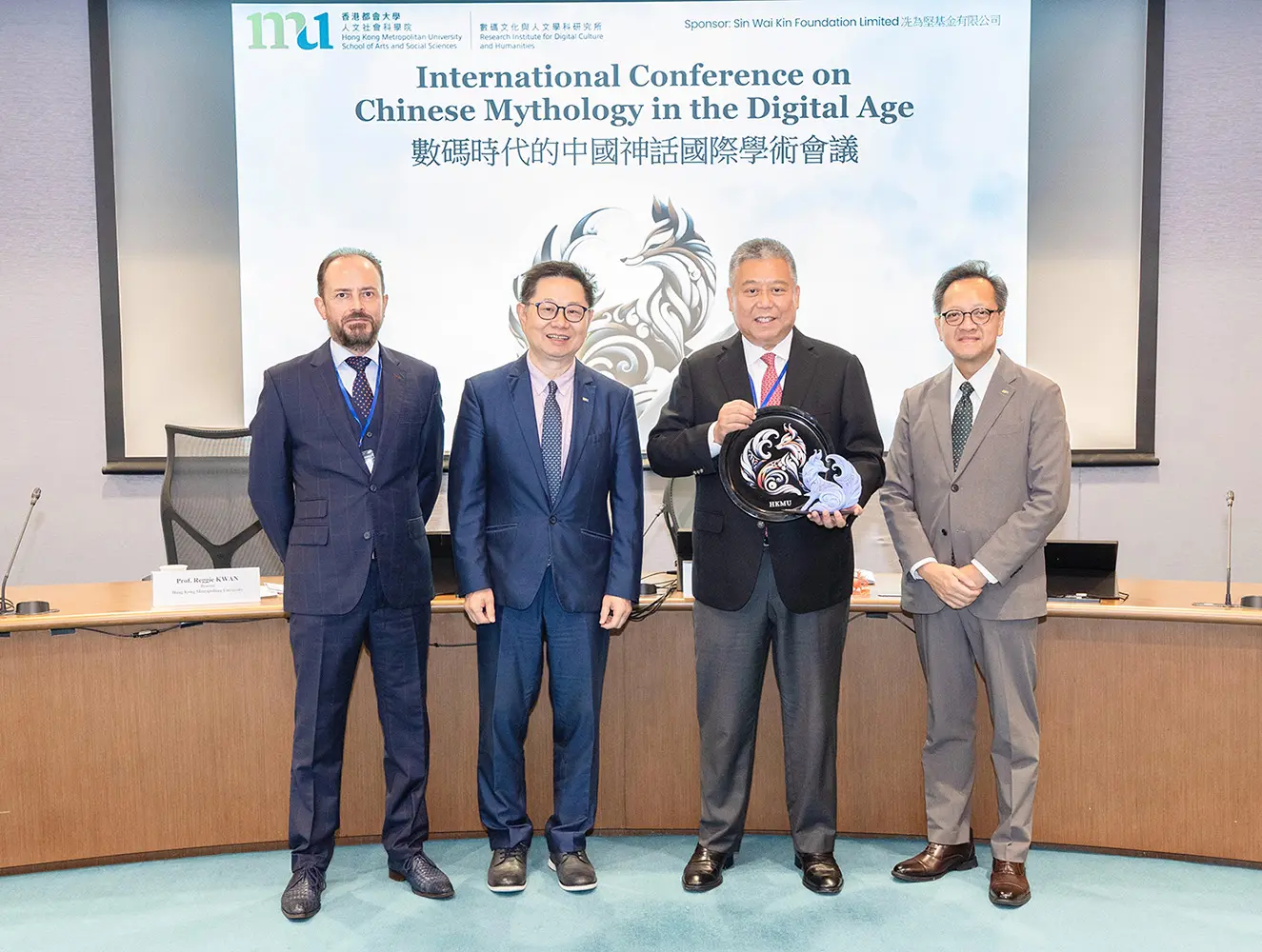
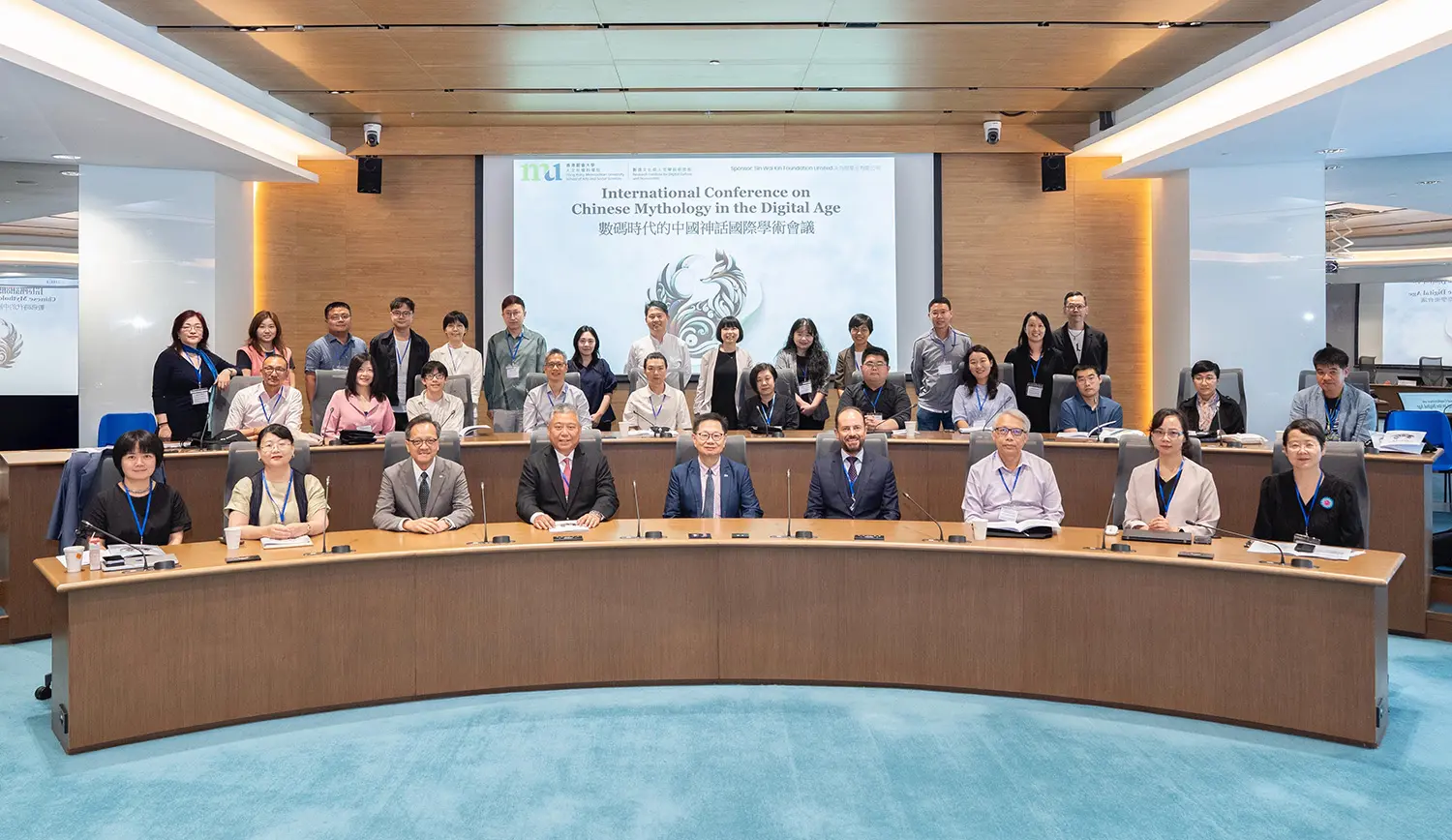
The Research Institute for Digital Culture and Humanities (RIDCH) under the School of Arts and Social Sciences at Hong Kong Metropolitan University (HKMU) successfully organised the International Conference on Chinese Mythology in the Digital Age, held on campus from 1 to 2 August. The conference examined the inheritance, evolution and innovative transformation of Chinese mythology in the digital era, attracting approximately 100 participants.
Funded by the Sin Wai Kin Foundation, the conference showcased cutting-edge research across diverse fields, including visual arts, science fiction, online literature, game studies and anthropology, fostering cross-cultural communication.
With the rapid global proliferation of digital media and technology in recent years, Chinese mythology has experienced a vibrant resurgence in ways that were unimaginable just a few decades ago. This revival has been further propelled by emerging technologies, such as generative AI, opening new possibilities for reimagining and sharing these timeless stories.
The conference commenced with a session officiated by Mr Benedict Sin, Governor of the Sin Wai Kin Foundation; Prof. Reggie Kwan Ching-ping, Provost; Prof. Charles Kwong Che-leung, Vice President (Administration and Corporate Development); and Prof. Roger Scully, Dean of the School of Arts and Social Sciences.
The two-day event was privileged to host an exceptional lineup of distinguished scholars from various countries and regions, including mainland China, Taiwan, Singapore, Canada and the United States, as well as esteemed academics from Hong Kong and HKMU faculty. Their collective expertise and diverse perspectives enriched the participants' understanding of how Chinese mythology continues to thrive across contemporary platforms, including digital storytelling, gaming, social media and digital archives.
Through engaging scholarly discussions, the participants explored the profound cultural significance and distinctive aesthetic values of Chinese mythology. Various panel discussions examined how its narratives and symbols transcend geographical and cultural boundaries, resonating with global audiences and fostering meaningful cross-cultural dialogue.